
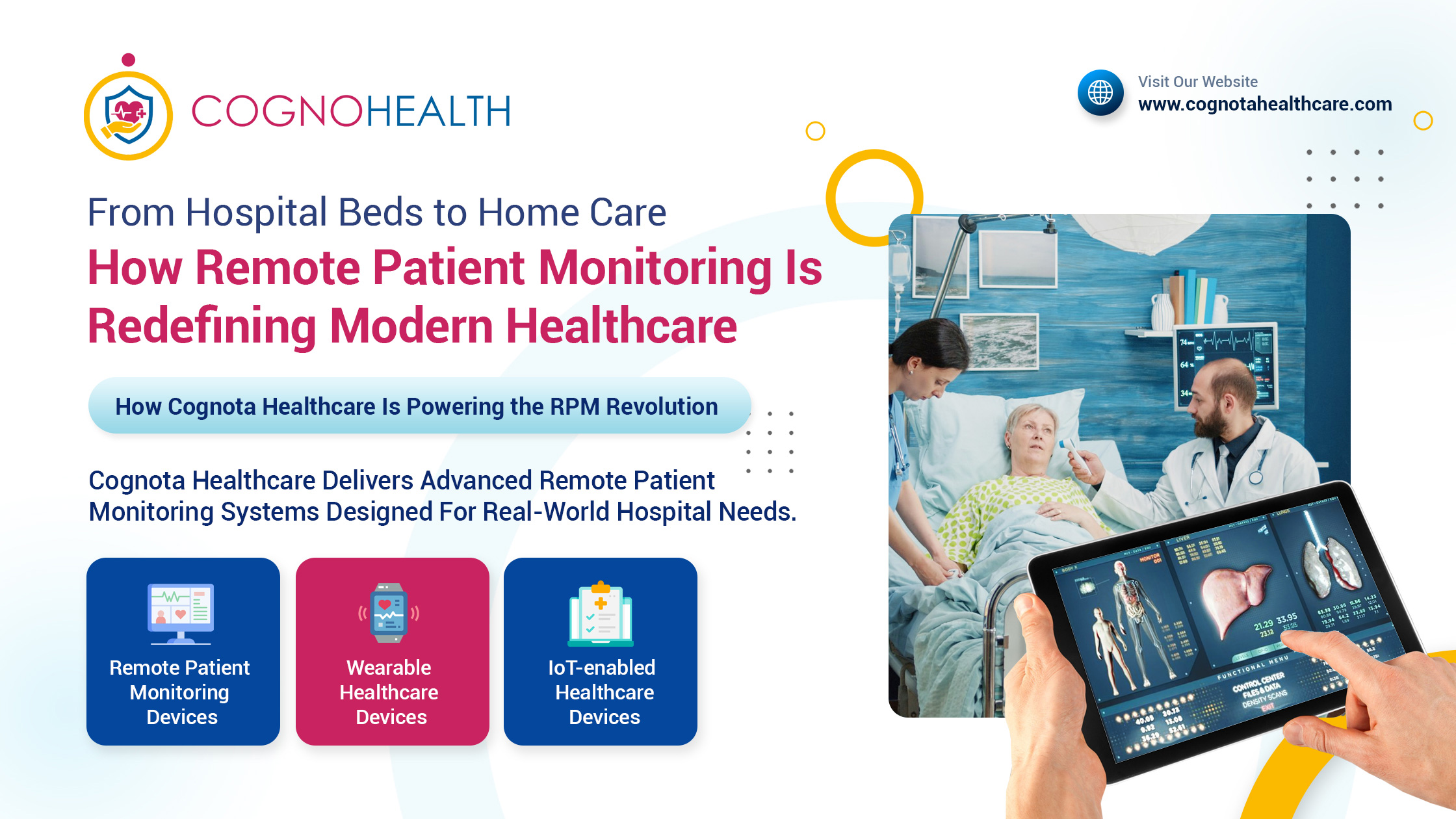
From Hospital Beds to Home Care: How Remote Patient Monitoring Is Redefining Modern Healthcare
Healthcare is undergoing a quiet but powerful transformation. As hospitals face rising patient loads, staff burnout, and increasing pressure to improve outcomes, care is no longer confined to hospital beds. Today, Remote Patient Monitoring is redefining how healthcare is delivered shifting critical care from hospitals to homes without compromising safety or clinical effectiveness.
This shift is not just technological; it is structural. With the help of remote patient monitoring devices, connected healthcare devices, and intelligent remote patient monitoring systems, providers are delivering continuous, real-time care well beyond hospital walls.
What Is Remote Patient Monitoring and Why It Matters Today
At its core, remote patient monitoring refers to the use of digital healthcare devices that collect patient health data outside traditional clinical settings and securely transmit it to healthcare professionals.
So, what is remote patient monitoring really solving?
- Overcrowded hospitals
- Rising readmission rates
- Limited availability of clinical staff
- Gaps in post-discharge patient monitoring
By enabling continuous monitoring at home, Remote Patient Monitoring ensures that patients remain connected to care teams even after discharge reducing complications and improving long-term outcomes.
How Does Remote Patient Monitoring Work in Real Life?
Understanding how remote patient monitoring works helps explain why adoption is accelerating globally.
A typical remote patient monitoring system includes:
- Remote patient monitoring devices such as BP monitors, glucose meters, pulse oximeters, and wearables
- Secure data transmission using IoT healthcare devices
- A centralized clinical dashboard where doctors track patient vitals in real time
These wearable devices in healthcare automatically capture data and alert clinicians if values move beyond safe thresholds allowing early intervention without requiring hospital visits.
The Shift from Hospital-Centric to Home-Based Care
Traditional healthcare models depend heavily on in-hospital monitoring. However, this approach is no longer scalable.
With post-discharge patient monitoring, patients recovering from surgery, chronic illness, or ICU stays can be safely monitored at home. This reduces hospital stays while maintaining clinical oversight.
Hospitals adopting remote patient monitoring systems report:
- Fewer emergency readmissions
- Faster recovery timelines
- Improved patient satisfaction
- Reduced operational costs
This shift represents a fundamental change from episodic care to continuous, connected care.
The Role of Wearable Devices and IoT in Modern Healthcare
The rapid growth of wearable healthcare devices has been a major driver of RPM adoption. These smart healthcare devices collect accurate, real-time data without disrupting patients’ daily lives.
Modern wearable devices in healthcare and IoT healthcare devices enable:
- Continuous vital tracking
- Automated alerts
- Secure data sharing with providers
- Personalized treatment adjustments
As the wearable healthcare devices market expands, hospitals are increasingly integrating these tools into their standard care pathways.
Remote Patient Monitoring Market: Why Adoption Is Accelerating
The global remote patient monitoring market is growing rapidly, driven by aging populations, chronic disease prevalence, and the need for cost-effective care delivery.
Key drivers include:
- Demand for scalable healthcare solutions
- Increased adoption of connected healthcare devices
- Emphasis on value-based care models
- Regulatory support for digital health
In India and globally, hospitals are now viewing remote patient monitoring systems not as optional add-ons, but as essential infrastructure.
RPM and Chronic Disease Management
Remote Patient Monitoring plays a critical role in managing chronic conditions such as:
- Hypertension
- Diabetes
- Cardiac disorders
- Respiratory illnesses
With connected healthcare devices transmitting real-time data, clinicians can detect early warning signs and adjust treatment plans proactively preventing complications before they escalate.
From ICU to Home: Continuity of Care Beyond Discharge
One of the most impactful applications of Remote Patient Monitoring is its integration with critical care and step-down units.
Patients discharged from ICUs or high-dependency units often require close follow-up. Post-discharge patient monitoring bridges this gap by extending hospital-grade monitoring into the home ensuring continuity of care without physical bed occupancy.
This continuity significantly improves outcomes while easing pressure on hospital infrastructure.
How Cognota Healthcare Is Powering the RPM Revolution
Cognota Healthcare delivers advanced remote patient monitoring systems designed for real-world hospital needs.
Cognota’s RPM solutions integrate seamlessly with:
- Remote patient monitoring devices
- Wearable healthcare devices
- IoT-enabled healthcare devices
Through a secure web and mobile platform, clinicians gain real-time access to patient vitals, alerts, and trends supporting faster decisions and proactive care.
As part of Cognota’s smart healthcare ecosystem, Remote Patient Monitoring works alongside Smart ICU and hospital systems to deliver connected, end-to-end care.
Know more about [Remote Patient Monitoring]
The Future of Healthcare Is Connected and Continuous
Healthcare is no longer defined by physical boundaries. With Remote Patient Monitoring, care travels with the patient from hospital beds to home environments without losing clinical visibility.
As the remote patient monitoring market continues to grow, hospitals that invest early in scalable, device-agnostic RPM systems will lead the next era of healthcare delivery.
The future belongs to connected care and Remote Patient Monitoring is at its center.

